
Bad HR Software Is Making the Army Less Lethal
How a soldier went missing in his own barracks, and the unglamorous software failure behind it.


When Alex and I first talked about writing together, I asked him for a concrete example of an Army process that failed. He described a personnel shuffle in which bad personnel management software and processes left a unit unsure where one of its own soldiers was. His experience showed me a problem that should be fixable, remains strangely unfixed, and carries consequences far beyond administrative frustration.
Here’s his story.
The Army has a human resources management software problem. The problem is patently unsexy. It doesn’t scream “lethality,” nor does it go boom. However, it’s one of the military’s quiet problems that private capital regularly overlooks. I was a transitional company commander of ~200 people in 2024. I had to make the organization’s personnel management playbook as a part of this. After a week, I was leaving the emergency room at the on-post hospital at two in the morning stemming from a problem with personnel management.
The Army’s Integrated Personnel and Pay System (IPPS-A) is the most-utilized enterprise system for personnel management. The most glaring of the problems, in this case, was the latency of the entire tapestry of the Army’s enterprise software suite. A battalion’s IPPS-A roster of personnel almost never reflects the ground truth of who is actually working in that organization and who is not. In reality, battalions, brigades, and even divisions work off of Excel trackers. At best, everyone in the brigade is aware of and has access to the latest personnel roster; at worst, everyone’s working off different sheets of music.
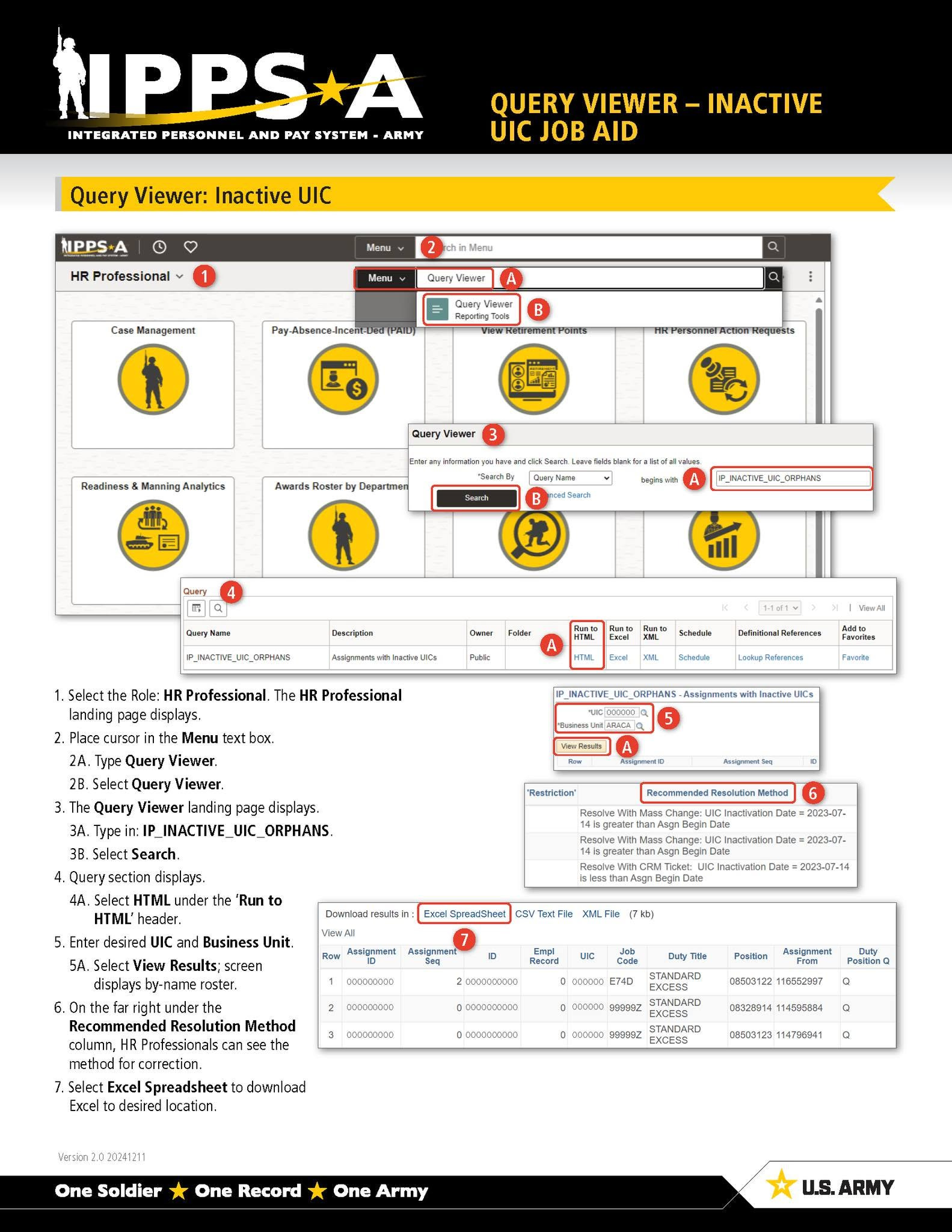
Overlay this problem onto around 200 people consolidating into one organization from units that have been deactivated — dozens of people moving to new units daily, a loss of leaders to coordinate these personnel movements, and a new Excel tracker each week — and things inevitably get weird.
Here’s what I had for human resource management for a brand new organization of ~200:
One S1 (human resources professional) leader who wasn’t actually assigned to my organization. He was just helping us out of goodwill. He could’ve left whenever he wanted (and he did a few weeks later).
IPPS-A access (our IPPS-A roster wasn’t even close to being accurate). We were told not to use this for accountability even though it’s the Army’s system of record for personnel management.
A Frankenstein Excel tracker pieced together from subordinate units that consolidated into the company I was now commanding.
Essentially, we had no ground truth of who was assigned to us and who was not. Our S1 did the best he could and was actively getting tabs on every single name on the IPPS-A roster to request to have people dropped from it. Oh, and by the way, there was only one person in the entire brigade able to add and drop people from IPPS-A rosters.
Our S1 landed on an unfamiliar name and asked me and a few other folks whether they’d seen this person… nothing. No one had seen him in months. He wasn’t on the roster by which we were accounting for people. So, the S1 called the missing Paratrooper and asked him where he was, as he was supposed to be with a different battalion. The missing Paratrooper said he was in Kansas on leave even though he was never marked as having an approved absence to be on leave.
He was never in Kansas. He was AWOL living in his barracks room for months. He was supposed to be reporting to a battalion within our brigade, but he wasn’t. His supervisor failed to confirm he had been received by his new unit well before I was in charge. So, the unit he departed from thought he was working with his new unit. His new unit didn’t know he existed.
We found him in his barracks room and brought him to the emergency room for suicidal ideation after: frantic phone calls with no answer, finding his emergency contact info and calling his parents, getting his phone’s location through his parents, scouring the installation for him based on his phone’s location, hearing from one of his Twitch streaming friends that he wanted to hurt himself, going into his barracks room, not finding him, and then finding him hiding in his barracks room.
This is a vivid consequence of human resource software being so bad that end users buck it because no one trusts its ability to provide an accurate picture of who’s who and where they are. Senior leaders in the Army say that issues like this are a consequence of leaders not being engaged. I find that position disingenuous at best.
Military leaders are uniquely responsible for the welfare of their subordinates. However, should something like basic accountability be that complicated and time-consuming due to critical software not doing what it’s supposed to do? Hours spent white-knuckling simple administrative tasks that enterprise software does nothing to streamline are hours spent not training. Human resource enterprise software that reliably provides leaders with the ground truth of their personnel rosters frees leaders from spending 10-15 hours per week just trying to straighten out who belongs where in and out of their organization. That’s — on the low end — 40 hours per month units could spend on live fires, field training exercises, or marksmanship. A durable solution for something as simple as human resource management could make units across the military more lethal than any of the latest, greatest defense products on the market today.
Zooming back out from Alex’s story.
Armies have always struggled to distinguish recorded strength from actual strength. During the American Civil War, muster rolls — the era's system of record for personnel — were unreliable between musters, failing to capture soldiers who were sick, absent, detached, or otherwise unavailable. More recently, “ghost soldiers” in Iraq and Afghanistan showed how badly a force can misunderstand itself when personnel records drift from reality.
When military power depends on a reliable muster, uncertainty over who will show up becomes a mobilization problem. If leaders must first reconstruct the organization they are supposed to own, training and deployment timelines lengthen. In a crisis, this would not just remain an HR problem. A 2023 Army exercise estimated it would take over two months just to move a single division from armory to theater, leaning heavily on reserve forces that have to be assembled and accounted for from a cold start. If units can't establish who they actually have, that timeline only lengthens. And in a great-power conflict, where deterrence depends on arriving before an adversary can present a fait accompli, those lost weeks carry real strategic consequences.
Modern software should make at least part of this easier. Today, a large organization should be able to know who works for it and what exactly they are doing. Large multinational firms numbering hundreds of thousands already manage workforces spread across the globe, with constant churn in roles, pay, leave, and transfers. I know, because I’ve worked at one. Their systems are imperfect too, but managers do not use spreadsheets to manage HR data.
This is why the Army’s current condition feels so strange. It has an enormous appetite for future concepts of warfare, new technology, and lethality, but leaders still spend too many hours establishing the ground truth of their own units. Time-consuming manual reconciliation using inaccurate Excel files replaces a real system of record.
The causes are probably mundane. Funding may be too low and aimed at other things. Bureaucracy may make every fix slower. Congress and senior Army leadership may see personnel software as a low priority. I wasn’t in the Army, but I don’t think any field grade officer’s performance report brags that they know where everyone is in their unit.
And perhaps most relevant to my readers, the defense technology world also prefers things that look cool. Drones, directed energy, and artificial intelligence are all cooler and easier to sell than personnel systems, which are boring.
Still, we have to take this more seriously. While personnel software will never have the glamour of a weapons system, better HR software systems would give commanders back time, reduce avoidable risk to soldiers, and make the Army’s picture of itself more accurate when the time comes for mobilization.
Check out Alex’s Substack here.
The views expressed in this article are those of the author(s) and do not necessarily reflect the official policy or position of the Department of Defense or the U.S. Government.
 | A guest post by
|
The issue here is that commanders look at the end product: did we accomplish our task? I.e., does the sausage fill our bellies? Never mind the taste or production methods. If not, where can we spend our finite funds to fill that belly better? Losing one Soldier in the barracks pales next to losing a war or trade negotiation.
Now, the idea that you could have more training time is much more salient. But you can just stay later and get the HR stuff done even without a more efficient system. Don't you care about your career, Major?
The systems are broken, but combat power is generated and effectively applied. That's all that matters, and not in a cynical sense. The military breaks people on both sides of the gun. I'm not sure a real alternative is feasible, at least just yet. But if you can come up with something better, many people will be grateful.
This scholarly article sums it up best:
https://www.duffelblog.com/point-counterpoint-future-wars-will-be-fought-with-ai-robots-vs-microsoft-word-is-not-responding/