
Kafka Processes
What Franz Kafka Understood About the Pentagon Bureaucracy

Every few months, ten people board a plane and fly to the nearest building with a classified terminal. The purpose of the trip is to log into a computer. If they do not log in within a certain window, their SIPR accounts are deactivated, and the process of reactivation can be quite painful. Companies therefore fly people across the country to tap a keyboard, confirm they still exist in the system, and fly home.
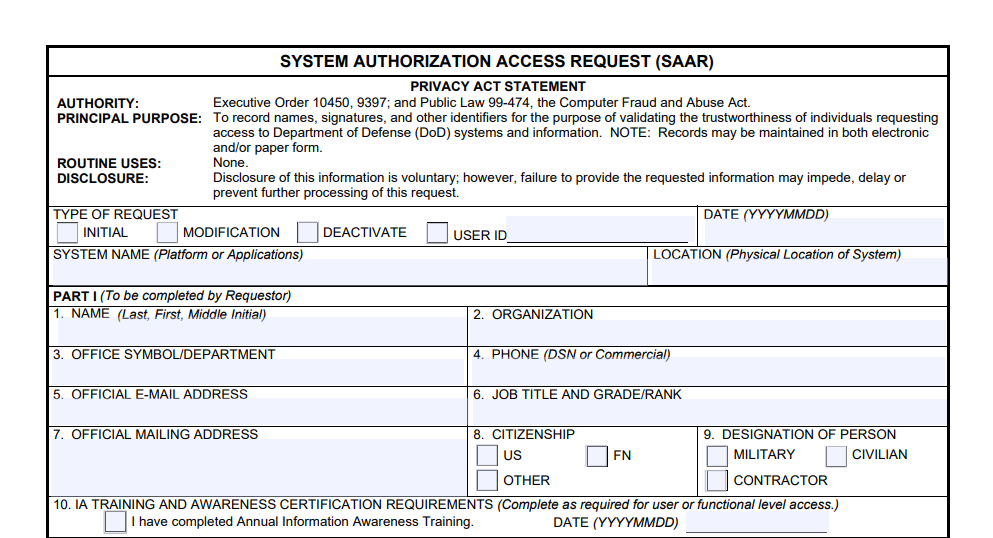
In 2025, the Department of Defense still requires personnel to fill out PDF forms for a broad range of administrative and security processes. These are not interactive web forms connected to databases but static documents that a person downloads, fills in, saves, and emails to someone who then manually inputs or stores the information into a separate system. The office that manages the form points to the regulation that requires it. The regulation may have been written by a working group that no longer exists. The working group was responding to a legislative requirement that may or may not still be in effect. No one can say with certainty whether the form serves a purpose, but everyone fills it out, because the consequences of not filling it out are immediate and personal.
These phenomena need a name. The defense reform community has developed its own terms over the past two decades — such as the self licking ice cream cone or bureaucratic bloat — but these terms don’t capture the texture of the thing they describe. They imply a system or process that is broken in ways a person could theoretically identify and repair. What they do not account for is the specific quality of dealing with a system that appears designed to be unreachable by its users (or victims). The SIPR login flight is not a gap in a process. The PDF form maintained by a dissolved working group is not an acquisition problem. They are something else, something for which the policy vocabulary has not produced a term.
The most precise description I have encountered comes from a Czech insurance clerk who died of tuberculosis in 1924.
The Castle
Franz Kafka’s The Castle is an unfinished novel about a man known only as K. who arrives in a village governed by a bureaucracy operating from a nearby castle. K. has been summoned — or perhaps not summoned — to serve as a land surveyor. The castle’s administrative apparatus claims to be without error, but it is an error in the apparatus that brought K. to the village in the first place. When K. raises the discrepancy, the Mayor responds:
“Official errors do not happen, and even if an error does happen once in a while, as in your case, who can say in the end that it is an error?”
K. spends the remainder of the novel attempting to gain access to the castle, to speak with an official named Klamm, to obtain some form of recognition that he exists within the system and has been assigned a role. Messages are lost or misdirected. The villagers regard the castle’s officials with deference, and explain in extended monologues the purpose of the official bureaucracy. Everyone offers an explanation for the officials’ conduct, but the explanations shift and reveal even more layers to the problem.
The parallels are obvious here. The castle is the defense bureaucracy. K. is the firm or person that has been summoned, or perhaps not summoned, to do business with it.
This bureaucracy can kill startups in the “valley of death” — the space between a working prototype and a program of record in which companies exhaust their funding. The metaphor implies a far side that is visible and a journey that is dangerous but legible. But perhaps it’s not the most accurate analogy. I think the Kafka analogy is better because what Kafka describes is not a crossing but a maze, where a startup is simply unable to locate the entrance to the castle. It’s a common experience where a startup finds that the entrance to the “castle” is the wrong one, or they are referred to the wrong official, or they seek an official only to realize they have no power or no longer hold the right position.
“Quite simple,” said the chairman, “you haven’t really come into contact with our authorities. All those contacts are merely apparent, but in your case, because of your ignorance of the situation here, you think they’re real.”
I propose the term Kafka process to describe any administrative, security, or bureaucratic procedure whose original purpose has been lost, whose responsible authority has dissolved, and whose existence doggedly persists without any discernable institutional benefit. The SIPR login flight is a Kafka process. The PDF form is a Kafka process. The term is more specific than Kafkaesque, which has been diluted into a general synonym for frustrating or absurd.
A Kafka process is a precise structural phenomenon. And they are rarely encountered alone. In practice they layer and interact — one process requires a form that another process cannot transmit, a compliance requirement routes through an office that no longer owns the authority it once held — and their accumulation is what produces the maze that produces the valley of death.
The Blankface
The castle requires inhabitants.
The computer scientist Scott Aaronson coined a useful term for a particular type. A blankface, in his formulation, is a person who wields the power entrusted in them to make others miserable by acting as a cog in a broken machine, rather than as a human being with courage, judgment, and responsibility for their actions. The blankface meets every appeal to facts, logic, and compassion with the same repetition of rules and the same blank expression.1
The common reference point for this kind of absurdity is Catch-22, of course originating from the book about the Air Force in World War II, but the blankface occupies a different position. Catch-22s describe a simple circular logic creating a paradox. The blankface requires no logical paradox. The person behind the desk has concluded that the safest course of action is to never exercise judgment, so any encounter with them feels like an interaction with an impassive system.
Hannah Arendt identified the broader culture that produces such encounters. She called it “Rule by Nobody,” a condition where no identifiable person is responsible for what the system does. The defense reform community has spent years calling for cultural change within the Department of Defense, but these prescriptions rarely identify the culture they are proposing to replace. Arendt’s formulation is more precise.
Arendt spent much of her life thinking about how evil does not require malice. This is why encounters with Kafka processes feel disproportionate to their apparent stakes and why a travel form can produce not just frustration but something closer to moral anger.
A clarification is necessary here. I am not arguing that the Department of Defense is evil, nor that the people who work within it are all blankfaces. The majority of people in the defense enterprise are attempting to do their jobs under difficult constraints, and many are frustrated by the same dysfunction this essay describes. But when a PDF form persists for years because the working group that created it has dissolved and no one inherited the authority to retire it, “Rule by Nobody” is present.
The problem is not a person but an absence of a person, the empty seat where a decision-maker ought to be. What this looks like in practice is banal, granular, and repetitive, which is exactly what makes it so durable. The details that follow are evidence of that absence.
The Nightmares
‘My business is only to get a precise account of this afternoon’s events down on paper for Klamm’s village registry. The account is drawn up already, there are just two or three gaps I want you to fill in to make sure it’s all in order. There is no other purpose, nor can any other purpose be achieved.’
[K. Asked,] ‘will Klamm read these records?’ ‘No,’ said Momus, ‘why would he? Klamm can’t read all the records, in fact he never reads any of them. “Oh, don’t come pestering me with your records!” he often says.
I hold a reserve assignment with an active duty component, and am required to complete a travel authorization form for personal travel abroad. The form contains personally identifiable information, including my Social Security number. I was sent two forms and a mandatory training — a PowerPoint reminding people not to do obviously irresponsible things — and one of the forms required a supervisor signature.
I contacted both my reserve office and the active duty office to determine which owned the process. Both told me to complete the forms.
My email account is Air Force. My supervisor’s account is DODIIS. When I attempted to send the signed form, the system blocked the transmission because PII cannot be sent to external addresses, and the system classified a DODIIS account as external, even though both accounts belong to the Department of Defense. I could not encrypt the message. I could not use DoD SAFE because there was no clear way to log in. I had no authorized method of transmitting a required form to the office that required it.
I eventually asked the Air Force office to forward the attachment to the active component office. I then learned that I had never needed to send the form to the active duty component at all, because my clearance was not managed there.
The system operated exactly as designed.
Here’s another one I heard from a friend in the Air Force:
Orders were given above his head, the unfavourable and the favourable alike, and ultimately even the favourable probably had a nub of something unfavourable in them, but anyway they all went above his head, and his status was far too low for him to intervene or actually silence them and get his own voice heard.
The gist of it is this. Some kind of decommissioned classified computer equipment sits inside a SCIF. It is broken and has been broken for some time. It cannot be removed, because removal requires an authorization process that no one present has the standing to initiate. A form must be filled out periodically to certify that the object is present and accounted for. The authorities to remove this requirement are simultaneously absent, unreachable, and unknown. No one supervising the unit from above is checking the form’s contents. The process sustains itself entirely through the inertia of compliance.
Kafka processes survive because following a rule, however irrational, protects the individual who follows it, while exercising judgment exposes them. If a person bends a rule and something goes wrong, they lose favor with the Castle. If they follow the rule, the rule is responsible, which in practice means no one is responsible, so they are safe.
This is what makes Kafka processes a stable equilibrium. Reform proposals initiated from within must be approved by the offices that created the bureaucracy. Circumventing the system fails too, because every improvised workaround is officially banned, putting risk on the improviser.
The Consequence
He certainly goes into the offices, but are the offices really the castle? And even if the castle does have offices, are they the offices which Barnabas is allowed to enter? He goes into offices, yes, but that’s only a part of the whole, for there are barriers, and yet more offices beyond them… He can enter an office, but it doesn’t even seem to be a real office, more of an anteroom to the offices, perhaps not even that, perhaps a room where all who may not enter the real offices must be detained.
This experience has founded companies. The founders of Nooks, which provides “SCIFs” and classified workspace as a service, encountered a tangle of Kafka processes and built their company “out of rage.” Anduril was founded on the conviction that the front gate of the castle was not going to open, and that the only viable strategy was to apply pressure to the walls from outside.
The fight is difficult. A Kafka process will not be eliminated by an internal memorandum arguing that it is unnecessary. It can only be eliminated when enough actors outside the system — industry, Congress, department leaders, and military commanders with sufficient authority — make the cost of maintaining it higher than the cost of retiring it. Sometimes this happens in wartime conditions, where people simply just ignore and move past the bureaucracy due to wartime exigencies. Dislodging these processes is much harder without a major crisis, but people are trying. The specific mechanics of how that insurgency operates are the subject of a subsequent essay.
Kafka died before completing the novel. His friend and literary executor Max Brod reported that K. was to die of exhaustion from his efforts, receiving on his deathbed a notification from the castle that his legal claim to reside in the village had never been valid, but that, taking certain auxiliary circumstances into account, he was permitted to stay.
The views expressed are my own and do not constitute endorsement by the Department of Defense, Department of the Air Force, or the U.S. Government.

This takes it's always been done this way to a while new level.